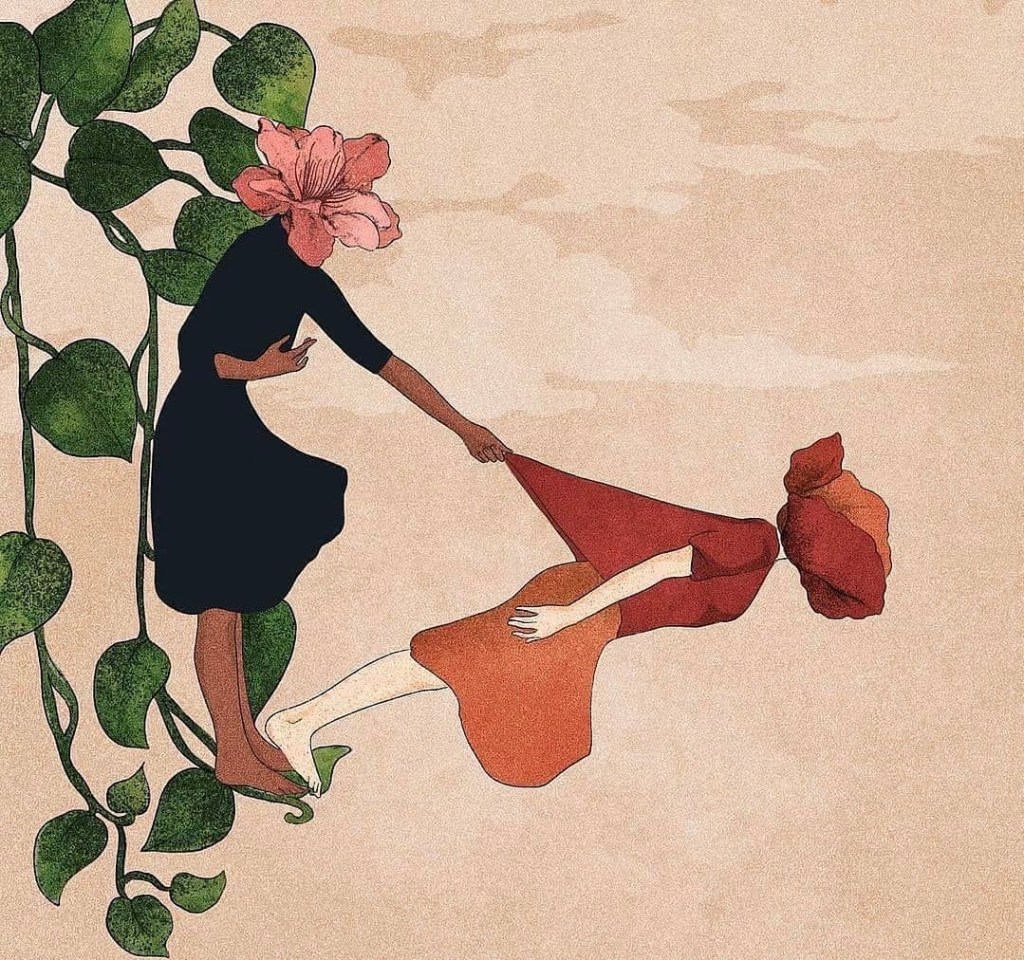
I use the experience of having friends from all age groups to tell you that we all have a common core struggle and I’m beginning to sniff out the enemy.
Forming a connection is a choice, but are we aware of the choices we’re making? And why?
From my older friends I discovered not only pearls of wisdom, but also the versions of youth that came before me. It’s hard to discern if I bring out the inner child in them or if they redefine what being an old soul means to me. I look at them and I say, “It’s getting late, we must go home!” and they turn around and say, “I know a place and we’re only allowed to leave at sunrise!”
Sometimes at a dinner party, when we’ve gone through too many bottles of wine, a beautiful combustion of love and vulnerability surfaces and I hear stories of their past that sound like war stories. Laced with abuse, violence, trauma, loss and heartbreak that makes me surrender to the wheel of time and phases that I have yet to encounter in my own life. My heart occupies my face for them to still be so kind, compassionate and humorous despite facing the wrath of existence.
However, I do often wonder if the generations before mine had the time to face their trauma. That the period of isolation and introspection was a luxury they could never have and that the language of mental health was still gibberish. So much of their sustenance depended on survival that emotions were forgotten in the boot and not the backseat. And when I question them about the way they coped they always say, “There’s no point dwelling in the ruins of the past. You have to keep moving ahead and not take life so seriously.”
I’d believe that more if their alcoholic selves didn’t enter a melancholic monologue that belongs with a therapist but we all have our ways to brush things under the carpet. As a listener it does worry me that underneath the layers of a wise and confident veteran of life, lies the horrors of the past keeping them up nightly.
When I look at friendships around my age (I’m 27), I see us juggling a complex relationship between identity and escapism. We feel every cell in the bloodstream of our emotions as we try to make sense of the world that seems to shift every second. In our 20s, there’s an undeniable attraction towards experiences that we may never forget or regret. Whilst we sow the seeds to establish who we want to be known as professionally, we also hope to reap the fruits of our labour before our limbs feel heavier than they used to.
It’s peers in the same age group who can truly relate to the tragic projections laid on us from the previous generations. While some parents provide for us selflessly, it comes with a contingency of bearing the weight of their unresolved emotions at times. We humorously call it trauma-bonding when we exchange stories about our mommy and daddy issues but what we’re essentially doing is scouting for a safe space outside of our homes. To find a piece of our soul that isn’t tainted by generational trauma.
However, in doing so, I can’t speak for anyone else but I am certain that at each stage of my life I have sought or attracted friendships that resembled a few familial dynamics. Perhaps a friend who took care of me like a parent or someone who listens to my endless ranting like a devoted sibling. The personalities of my family should’ve served as a template of what I shouldn’t be looking for in a friend but ironically, I just stumbled on better versions of them. And sometimes when I was lucky or gravely unlucky, I found completely different souls that would either inspire me to change or deplete my confidence to level invisible.
We also enter a fairly large phase that gets lost in the consumption of substances and alcohol to numb our senses and the confusion. We possess a lot of sexual energy laden with trauma that we haven’t a clue what to do with. Neither do we have the maturity to understand if we actually enjoy it, nor the ability to comprehend if we’re rubbing more salt on fragile wounds. But this is the age of experimentation, to go to the depths of our urges. We rapidly sink to the bottom but when we begin to gently ascend to the light, we can’t help but notice the dents that needed healing all along.
All of these experiences turn into a consultation with friends who are most likely going through similar transformations at their own unique pace. Which isn’t always productive when one finds a crumb in a story that sounds similar to a situation they’ve been through and becomes an advisor and not an empath. But can also be beautifully constructive when the guidance can make us feel like destiny added an angel into the mix to save our lives. It’s the risk we’re willing to take with friendships and that’s the cycle of life but is there also perhaps a circle of delusion that we’re avoiding?
I’ve noticed that the route of all connections is the varying degrees of loneliness and how we respond or react to it, no matter what generation we belong to. The purpose of my outlook on friendships with different age groups is for me to understand how we choose our friends and why.
When we were children, we hardly understood the concept of being lonely. We feel a brief moment of abandonment when our parents place us in a classroom full of strange kids our age. At this stage, friendship is mostly born out of curiosity and habit rather than anything deep or stimulating. But as we evolve, so do our emotions and so does our ability to navigate through complex situations.
On a teenage level where our minds turn into a sponge of exaggerated feelings, we begin to witness the drastic shifts in human connection. The heartbreak, betrayal, bullying but also the fun, silliness and love on steroids. And just when we get consciously aligned to a certain type of world in school, we graduate to university where we enter another sea of new personalities.
We want friends, we want a reason to keep going to classes and so when we encounter a group that we wish to be friends with, it could either be make or break. How often do we tag along with the wrong crowd just to feel like we belong somewhere? With the license to try everything while we’re young, we convince ourselves that this is what we need to stay connected to people.
It’s not so much the experiences that are wrong, nothing is ever wrong but it’s more about the intent we lead with and how often we allow ourselves get carried away and bury our true feelings towards it. And if we let this go on into a web of drama, before we know it, we’re 50 and we still have friends who deeply dissatisfy us because we’ve chosen it as a way of being.
The question I ask myself is, how far will I go just to not be lonely? If I can sit down and address the root of all my friendships, can I confidently say that all of them bring out the authentic version of me. No. Not yet.
It might be unrealistic to believe that all friendships must be perfectly aligned with who I am. But what can be realistic is to acknowledge that certain connections come into my life to either teach me something about myself and the choices I’ve made to live a new lifestyle with them. The investment of energy and love will always come with the risk of not knowing what to expect, it could end in vain or earn a coveted spot for a lifetime, who knows?
But the point is, and I urge this thought on anyone who reads my words, is to carefully evaluate if the basis of any connection in our lives is loneliness. As humans we need human connection but do we just settle for anything? And if it is loneliness we fear, are there any steps we can take to address the void within ourselves before we can reach out to the world for more nurturing connections.
In the famous words of RuPaul Charles, “If we can’t be best friends to ourselves, how in the hell are we going to be best friends with somebody else?” Okay, those weren’t the exact words but I’m sure RuPaul would agree.
But it makes me happy that the language of mental health and healing seems to be floating in the air these days quite popularly. As we softly say, “This is an area for therapy my love” we create boundaries with a friend who needs to acknowledge that they need help.
When we allow ourselves the time to finally discover the layers of deception within us through the inner work in whatever form we enjoy it, we gather the courage to form our own little private language. The language of self-love, which becomes the template to use with existing/new connections where we say, “Hey, I didn’t like the way you treated me that day, could we talk about it?” or, “I’m sorry, I feel like I have been unfair to you and I’m willing to work on it and be a better friend to you with a little help.”
Communication, honesty and awareness really is the key to keep a connection healthy. And if we find that boring and unnecessary, we continue dancing the same old steps and can only dream about the new. In the dark, where loneliness will always be our best friend.
 Adishri
Leave a comment